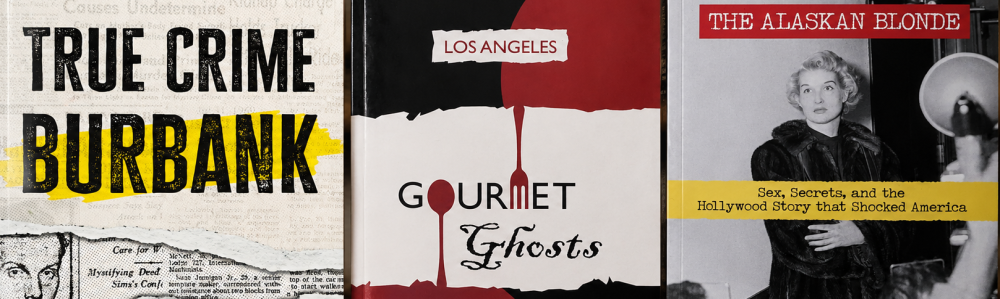
How I wrote “True Crime Burbank”

As you might imagine, I spent many, many hours at the Burbank Central Library on the microfiche reader – a classic old school piece of research equipment. It went out of order a week or two after I had finished however, but apparently the Friends of the Burbank Library are paying for the Valley Times and other long-gone Burbank newspapers to be digitized. That will be a long process, however. And of course the LAPL’s archives of LA Times and photos on TESSA – I am on there almost every day.

Am thrilled I can repay the library a little by giving a talk on October 20, though it will be at the Buena Vista branch, which has a larger function room (one of the reasons this Central Library is being replaced in the next year or two by a huge new facility, just across the road. I wonder if they’ll move the statue of Dr Burbank there too?)

My research was fueled by beef and potato-filled piroshkis, which I bought for lunch at the Classic Pastry store nearby. And the occasional custard-filled treat! Also, I listed to music a lot, especially a synthwave set by DJ LoFi Girl There was one particular track that I loved: Downtown Binary by Atlantis.

A horrific story that DIDN’T make the book “True Crime Burbank”

TESSA is the name for the digital photograph collection of the Los Angeles Public Library, and among the many thousands of images are those of the Valley Times, a newspaper that was in print from 1946 to 1970.

One particularly chilling photograph of theirs shows Burbank detective Robert Coveney holding what appears to be some large pieces of rock – only there were suspicions that they were in fact the remains of a burned human heart, lung and bones.

The heart, which had threads of what appeared to be silk attached – perhaps from the clothes its owner had been wearing? – had been found by Lionel Meeker on October 13, 1948 when he was cleaning the incinerator at the rear of his new home, a small white cottage on North Catalina Avenue.

The grim and puzzling discovery was described as “plunging police into a full-scale investigation of a possible mystery murder,” and the items were rushed to the sheriff’s crime laboratory in Los Angeles for analysis.

What had happened? Had someone been killed and their remains burned in an attempt to hide the crime? Police established that a Robert Lincoln Scott had lived there from 1933-1938, but he was since deceased, and before Meeker, two young men had lived there together.

It wasn’t unknown for medical students to play pranks with amputated legs or hands they had purloined from their classes and studies, but this was different. When further “bones” were found in the ashes Meeker, 22, told police he had washed away into the street at the end of a nearby avenue, investigators became more concerned.  

Detective Coveney felt there was “no doubt” they were human, but then the laboratory results came through, and Lieutenant Fred V. Wolfe reported that preliminary analysis showed them to be inorganic matter, perhaps plaster of Paris or asphalt.

The story disappeared from newspapers immediately, and perhaps these “human remains” were just old props from a movie designer or make-up specialist, or were thrown into the flames by a frustrated artist.