Unknown's avatar

About jbartlett2000

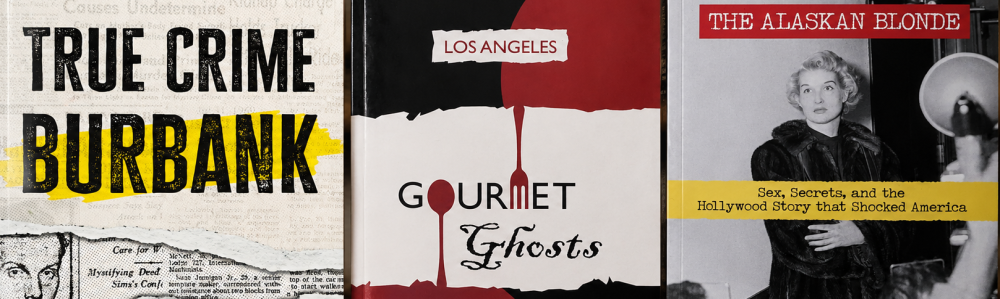
Travel journalist, "Ghost Adventures" guest, true crime book club host and author of the "Gourmet Ghosts" alt guides to the crime, ghosts, history and food of Los Angeles bars, restaurants and hotels, his latest book "The Alaskan Blonde" will be released in 2021, and is a 1950s true crime story of a murder in Alaska that ended with a suicide in Hollywood.

Extra! Extra! Wanna dive the Titanic?

In James Cameron’s 1997 movie, Bill Paxton’s treasure hunter sees the Titanic emerging from the gloom, and from next year extreme explorers and even fans of the Leonardo DiCaprio and Kate Winslet blockbuster can get up close with the luxury liner.

For the first time in over a decade, concierge companies are offering submersible journeys – what they call “missions” – to the wreck, and there are already plans in place for 2019.

Bluefish, based in California, are offering expeditions costing nearly $60,000 that set sail on the RV Akademik Keldysh, which Cameron used and featured in the movie, with dives to the depths in small, nickel steel MIR submersibles.

For the pricier ticket of over $100,000 per person (the cost of an original First-Class ticket in today’s money, according to one travel service), you can gaze out from a much wider viewport and enjoy more elbow room in Cyclops 2, the cutting-edge titanium and carbon fiber sub from private outfit OceanGate, who are based in Everett, WA.

Trips leave from Newfoundland, and passengers are part of the team and expected to be hands-on. This is no day trip or theme park ride, and even though you might only get an hour or two just feet away from the famous staircase, the radio room or even personal mementoes of the disaster, tickets are already selling fast.

Expeditions have been available before, but they came to an end around 2005.

Submersibles strong enough to withstand the pressure at such depths were Government-owned and rarely available, and the bulk of the cramped journey is just an hours-long dark descent to and from the ocean floor.

The crumbling wreck was getting less than camera-ready too, but the demand has never gone away, even after the 100th anniversary of the disaster.

The remains of the 1912 disaster were found 2½ miles down by explorer Robert Ballard and his team in 1985. The tragedy killed over 1,500 people when the vessel sunk after hitting an iceberg around 375 miles off Newfoundland on its maiden voyage between Southampton and New York.

You’ve got time to save up for your super-dive, though only about 15 to 20 years according to a study from last year, which revealed that due to “extremophile bacteria,” the wreck could have collapsed and been eaten to little more than lumps of metal by then.


Extra! Club Tee Gee

Club Tee Gee was another story that I cut from the book at the last minute: it was rather on the short side I thought. Now though, you get to read about it here…

Deadly Stray Bullet

Located on Glendale Boulevard, the Tee Gee wasn’t always a bar – the LA Times of May 4, 1927 announced that this address was originally given permission to open its doors as a bank – a branch of the Citizens Trust and Savings Bank, to be specific.

Today it’s rather an anonymous building. The windows are covered and the exterior is square mosaic cladding, though it’s more impressive at night when the neon signs light up in yellow and red (though it doesn’t really help with the fact that the “G” in the Gee looks a bit like a Y).

It’s definitely T and G though; the bar was named after owners Neil Tracy and Joe Grzybowski, who were in charge from day one. It was over twenty years later before this address made the newspapers again though, and this time it was in relation to something much more dramatic: a brazen robbery that led to murder.

In the wee hours of March 2, 1948, two armed youths had entered the tavern and said “This is a stick up!” prompting owner/bartender Tracy to immediately reach under the bar for a pistol, shooting 18 year old Charles Hagadorn in the arm before being shot in the chest himself.

There were only six customers present, and one of them – John R Markland, a local man aged 27 who was sitting in a booth nearby – was tragically struck by a stray bullet and killed. Lucille Tracy, sister of the now-injured owner Neil, was unseen in the kitchen and called the Police.

Officers followed a trail of blood to the nearby Los Angeles River, and the bleeding Hagadorn was quickly taken into custody, while the other robber, Sidney Moody, a 19 year old from Texas, surrendered soon after.

Tracy was listed in critical condition at a hospital in Pasadena, and when evidence later showed that it was a bullet from his gun that had killed the unlucky victim, both youths had murder charges dismissed, but pled guilty to charges of attempted murder and robbery.

Overall this spot seems to have had a quiet life – at least in terms of the city archives – though it was called Lathams for a very brief period in 2010, though that was strictly for the television cameras, when it was a location on the one-season ABC science fiction “FlashForward” television series (the episode was called “Blowback”).

Then in late February 2016, there was some sad news from here: the death of owner Betty Barlotta, who had been in charge since 1981 when she took over from the original owners, was announced.

Extra! Deadly cards at the Kawada Hotel

I had written a whole entry for the Kawada Hotel, but it got cut from Gourmet Ghosts 2 at the last minute – so here it is now!

downtown-hollywood-pics-for-gg-june-15-007

Operating as a mid-budget hotel, the unobtrusive Kawada has had a central spot in downtown on South Hill Street for nearly 100 years, and is a great spot especially if you’re a visiting tourist.

It’s close to Grand Central Market, Disney Hall, MOCA and the Broad Museum, while the building is also home to the cheerful Cherry Pick Café. During the day the Cherry Pick offers a large selection of pizzas, deli sandwiches, coffees and smoothies, and stays open until early evening.

downtown-hollywood-pics-for-gg-june-15-016

Though its windows are covered with signs and pictures of food, inside it’s actually a little hidden treasure: brightly lit, green sofas, silver tables, a large display case of pastries, cookies and cakes, and always plenty of office types at lunch – you can even buy coffee mugs with positive slogans written in Chinese on them!

Years before in the space on the opposite side of hotel there was a restaurant called Epicentre, which opened its doors in August 1991.

Believe it or not it was earthquake-themed, and opened just a few years after a real quake in Whittier Narrows in the San Gabriel Valley, which caused $350 million worth of damage and took eight lives.

Still, themed restaurants are nearly always popular, and the LA Times of August 8, 1990 quoted the-then Kawada assistant general manger as saying “Californians have a good sense of humor.”

The restaurant wasn’t as over-the-top as something you might see in Las Vegas though, but it did have walls that looked cracked, a map showing California falling into the Pacific, an artwork of City Hall – before and after an imagined temblor – and an open ceiling showing exposed wires and ducts (before it was fashionable).

Though the menu was somewhat standard – fish, chicken, pasta and steak – they did have some fun. You chose from a list of “epitizers” and desserts were called “aftershocks,” while a curry’s strength came on the Richter Scale: 1.0 for mildest, 10.0 for the spiciest.

The archives tell us that this hotel was built in 1922, though back then it was known as the Astor Hotel. It had no connection with the famous New York hotel – or family – but was doubtless one of the many around America that used the name to infer opulence.

The 200 room hotel changed hands in July 1933 when a Mr. and Mrs. Peck paid $40,000 for a five year lease, and though doubtless there were other owners, it was nearly 50 years before another change was noted in the LA Times on August 10, 1980.

V.J. Thomas Lee, the owner of a stock brokerage house and a theoretical physicist, had paid $1.3 million for what was then known as the 118 unit Astor Apartments, but there were bigger changes coming, as a 1988 article in the LA Times made clear.

Now it was owned by the Kawada Investment Co, the Astor was being upgraded and expanded, and Levi Velasquez’s barber shop – one of a number of businesses on the block – was closing to make way for the new development.

But the Astor Hotel had plenty of stories to tell before it became the Kawada.

On October 16, 1927 the LA Times reported on a $63,000 payroll robbery at the Municipal Bureau of Water and Power.

Leonard Efanti, 25, had arrived in Los Angeles two weeks ago from Chicago, and had taken a room at the Astor – which was right near the Water and Power building. He had three visitors while at the hotel – three men who matched the description of those who had carried out the robbery with him. Police also alleged that he had he observed the target building for days before the gang’s robbery took place in broad daylight.

Efanti, who registered as J. Eads, left the hotel without his luggage, but then later a torn curtain from his room was found in the alley behind the Water building and he was arrested.

Then, the February 1, 1940 edition of the LA Times reported on a deadly card game that took place in one of the rooms here.

Frank Urena had been shot and killed when bus boy Demetrio Palay grabbed Urena’s gun and opened fire, the bullets also hitting Paul Areola, who was in a critical condition. Palay, 25, was in custody on suspicion of murder and attempt to commit murder, and had been tackled to the sidewalk by Morrey Kline, who worked for the Los Angeles Evening Herald-Express.

Palay said he had won $500 from his card rivals in a previous game, and claimed self-defense. When he had won another hand “Urena drew a pistol and Areola grabbed my money,” he said.

As the struggle began, nurse Katherine Kershaw ran from the room and hid for five hours before being found – though she didn’t see who fired the fatal shots.

Finally – as far as the records show at least – in March 1958 the man who registered himself as “George Andrews” was found dead in his room here.

Also, there is something else – something unusual and rather famous – right across the road from the Kawada, and it was built at the same time as the hotel.

Known for its appearances in movies including Blade Runner, The Terminator, Independence Day, Con Air, Gattaca, Kill Bill and many more (to say nothing of hundreds of car commercials and pop videos), the brightly-lit white-shell curving 2nd Street tunnel is perhaps L.A’s biggest secret star.

You’ll know it when you see it, that’s for sure, but like the 3rd Street Tunnel (featured in Gourmet Ghosts – Los Angeles) it too came with a death toll.

Like most municipal projects it spent years in the planning and many weeks in the courts and the press being debated and criticized by both sides.

Planned to relieve heavy traffic from that 3rd Street Tunnel, it was controversial from day one; even the white tiles, which came from Germany, ruffled feathers because WWI had only ended a few years before. There were even (rejected) plans for a moveable sidewalk inside too.

A couple of thousand people turned up to see the first digs of earth on his then-huge bore project in April 1921,  though early the next year there was the first (and inevitable) accident.

A hundred tons of earth, rock and timbers slid down the west end of the tunnel trapping six workmen – two of whom were buried alive. One of them, Jesus Venzula, 32, was buried up to his neck, and with serious injuries that the LA Times said “probably will cause his death.”

Just over a year later in August 1922 there was another cave-in when two workmen were badly injured, but there were no other major incidents after that, the tunnel opening to much acclaim and applause in July 1924.

If it’s nighttime, check out the tunnel – it looks amazing lit up in the dark.
Extra! The Kipling Hotel Horrors

Kipling Hotel

Killer Clerk

Formerly a hotel and now a studio apartment building in Mid-City, the Kipling seems unremarkable from the outside, even though it has been here since the 1920s. There’s a popular Korean bar, Saek Dong Juh Gori, on street level, and though there are no stories online about any ghosts or spirits in this building, that doesn’t mean this place hasn’t seen bad times.

In fact, this building has a number of stories to tell, several of them concerning bad luck and tragedy for the staff, as well as the guests.

Opened in 1925 by Richard Kipling, it changed hands within a year when it was bought by M.M. Bryan, who promised to keep the name. In September 1929 death first visited the Kipling when real estate salesman John Francis Ryan, 44, took poison in his room here, leaving a suicide note to his estranged wife.

The Kipling changed hands again in 1930, bought by surgeon William T. Rothwell for $450,000, though he had an unlucky start to his tenure when the night clerk was robbed of $60 on December 30 that same year.

Then, on January 28, 1934 the LA Times reported the suicide of Harold Fuchs, 42, who was found dead on the floor of his hotel room, a vial of cyanide close to his body. There were no clues as to why Fuchs, who arrived from Miami just two weeks before, had committed suicide.

There was a new name on the deed in 1936 when Ella Spencer, “a recent arrival from Kansas City, Mo.” said the LA Times, shelled out $250,000 to own the keys, and then in August 1940 the Kipling was host to a famous – albeit unwilling – guest: mobster Benjamin “Bugsie” Siegel.

He was bought here and questioned after being rousted out by Police from a hidden attic at his mansion in Holmby Hills, a fact revealed at the 1942 trial of Siegel, who was accused of being involved a double murder.

In 1941 there had been another change in ownership (to Mr. and Mrs. A.L. Wilcox for yet another lower sale price of $175,000), despite the fact that the LA Times showed the hotel as being a regular location for events and functions of all kinds.

The hotel was one of eight robbed on the night of October 24, 1946 by “pistol-whipping bandits” who stole a car, held up two gas stations and then went on a rampage, evading Police, injuring several hotel clerks and escaping with an overall haul of $2,500.

Just a couple of months later on New Year’s Eve, it was also reported that composer Charles Wakefield Cadman, 65, who had been a resident at the hotel for the past two years and recently suffered a heart attack there, had died in hospital. A founder of the Hollywood Bowl, he was known for his interest in Native American music.

There was bad luck for the next Kipling owner, Paul F. Selersen, 46, when the small plane he was flying on December 30, 1951 crashed en route to Hemet, killing him and his four passengers, which included his wife Ruth and son Paul.

The Civil Aeronautics Board was investigating the claim that the plane had circled then climbed steeply, causing a stall and a rapid crash.

On February 24, 1953 there was more drama when Police came to the room of Mysti Clendening to return her son, 4 year old Terry, who had been found wandering alone in Lafayette Park (some dozen blocks away) a few days before.

Mrs. Clendening wasn’t there though, and it was assumed she was out searching for her son – but Police had a long wait for her; she didn’t come back to the hotel for two days. Apparently “emotionally upset,” she was ordered to appear at Juvenile Hall, where Terry was temporary staying.

Those events all pale into comparison in relation to what was doubtless the most shocking scandal here at the Kipling: the revelation that a former desk clerk was a murderer and mass-rapist.

The LA Times of August 12, 1983 reported that Jerald Curtis Johns, 32, had been sentenced for the rapes of 13 women and the murder of another during a killing spree the previous year.

Living what Police called “a double life” he was an active church member and worked at the Kipling Hotel where he “taught the bible” to residents, but at night he broke into houses brandishing a knife or screwdriver and assaulted women aged from 24 to 71.

Hunting in a 10 block radius of Santa Monica and Normandie (the latter barely two blocks from the hotel), Johns, who had been in and out of prison for sexual offences before and spent time in mental hospitals, was responsible for the death of one victim, who choked on her own vomit.

Calling it “one of the worst cases I’ve seen in 25 years,” an exasperated Judge Everett E. Ricks asked the prosecution during sentencing:

“Why didn’t you request the death penalty?”

In many ways it doesn’t really matter, because Johns is not eligible for parole until the year 2054 – by which time he’ll be well over 100 years old.

www.kiplingapartments.com


“Painless Parker,” L.A’s celebrity dentist

I was reading a piece on the Esotouric website today about their fabulous find of a quack medical clinic at the Dutch chocolate shop, and it reminded me of what I found when I had a look around the former main office of “Painless Parker”, the early 20th century showman/dentist/marketing genius (and surely the only dentist to have a movie made about him – sort of).

It’s still operating as a dentist today and is as busy as ever: the kind Dr. Lee let me have a look around. I wrote a piece about it for BBC.com (it’s here), but they only published about half of what I submitted – I really got into the tale of Parker, who is almost forgotten now, but was super-famous in his day.


Extra! Hungry Tiger Hollywood Shooting

3004131419_1e86b25e79_b

Standing guard as a kind of semi-official gateway to Hollywood, The Four Ladies of Hollywood is a piece of public art created in 1993 by Catherine Hardwicke as a tribute to the multi-ethnic women of Hollywood.

Striking in silver, it has representations of Dorothy Dandridge, Anna May Wong, Dolores del Rio and Mae West all holding up an obelisk-topped dome, with a small weathervane-style sculpture of Marilyn Monroe in her famous pose from The Seven Year Itch (1955) on top.

museum-of-broken-relationships-and-gg2-stuff-080

Just yards from this sculpture is the Emerson Theatre, a (seemingly) currently closed nightclub with broken bulbs on the sign, but in the past a real theater that saw many hopefuls – and maybe a few stars – tread the boards here.

At one time it was called El Patio, and its 800 seats were heralded in the LA Times of January 21, 1949 when it saved the Nine O’Clock Players latest show Let Us Be Gay, which had been hastily-rescheduled not once but twice, but was now going to open here.

A year before – though it didn’t hit the newspapers  until September 1950 – the El Patio was at the center of a “lonely hearts” club scam, where the unfortunate victim Mrs. Claude J. Neal, 55, was conned by George Ashley into signing several checks for a total of $17,500.

Ashley said he wanted the money for a deposit in advance of buying the El Patio, and even said she would be employed as the hostess there – but it was all part of several scams involving a number of people.

Though the married Neal said she had only joined the club to find friends, she did spend time with Ashley – though denied there was any romance between them.

Either way, Ashley was a cruel thief who threatened her with violence; he called her a “North Carolina hillbilly” and one time in his office, pulled out a gun and told her he didn’t want any more “monkey business.”

Neal went to the police after a frightening trip Ashley took her to at Nichols Canyon, where he pointed down the steep cliff and said:

“If I pushed you off there wouldn’t be one chance in 10,000 that your body would ever be found. Now, baby, you’d better fly right.”

Neal was one of an unlucky 13 woman who testified against Ashley and his co-defendants (one of whom was his son-in-law), while another victim was Ashley’s own wife, who was now suing him for divorce.

No wonder the Los Angeles Herald-Express nicknamed Ashley “Lord of Lonely Hearts.”

Much later in the life of this building – specifically in November 1974 – there was a nasty shooting at what was then the Hungry Tiger Restaurant, which had opened at a cost of $500,000 in 1968 (and is doubtless what’ today the Tiago Coffee Bar, located alongside the Theater and sharing the same address).

According to the LA Times, a patron dressed in a distinctive orange, two-piece satin suit complained that the lighting was too bright. An argument started between him and restaurant manager, but when the man struck the manager, waiter Herman Kuss, 39, tried to intervene.

The man then ran off up Hollywood Boulevard, exchanging shots with an off-duty LAPD Officer who witnessed what happened and (unsuccessfully) gave chase.

The man in orange got away, while Kuss was taken to hospital and his condition was described as “critical” – though there was no other archive information as to whether the charge became murder, or anyone was ever caught for the crime.

In recent years the Emerson was a club and music venue, but now it seems to be closed – many of the light bulbs on the sign are broken, and it looks rather creepy.

Indeed, for Halloween 2013 it was turned into a “Haunted Theatre” for a live-action scary event (plus a DJ), but now it seems the-then owners are no longer involved, and as such I didn’t find any ghost stories – though who knows what’s behind those closed doors now?

Alongside, Tiago is a “community-driven” coffee bar when you can get a breakfast, soups, salads, wraps, and of course plenty of java.

Since they’re at this end of the Boulevard they’re not mobbed with tourists, and my breakfast choice is their lemon ricotta hot cakes, which come with maple crème-fraîche and a choice of blueberries or bananas – but you must order them before 3pm.

$$ / Mon-Thu 7am-8pm, Fri to-6pm, Sat & Sun 8am-6pm

www.tiagocoffee.com


Extra! Jack La Rue’s in Studio City

This was cut from Gourmet Ghosts 2 at the last minute – I’d already gone way over my page limit – but now it’s here for you to read…

“Jack’s”

Since 2008 it has been sushi restaurant Kiwani, but when it opened here in the 1930s it was called Jack La Rue’s.

It’s had a number of other names over the years too, including Tamu Sushi, This Dinery, Uncle Tal’s Mandarin Gourmet, and Uncle Thai’s Hunan Yuen, but “Jack’s” it still is to many.

Jack La Rue was born Gaspere Biondolillo in New York in 1902, and first came to fame on that city’s stage before he made the move west and tried to crack Hollywood. Sometimes mistaken for Humphrey Bogart, he often played thugs and gangsters, but he was successful enough to invest in his own eaterie here in Studio City.

La Rue may have been a movie star who was married three times – including to Austrian Baroness Violet Edith von Roseberg, a union that lasted barely a fortnight and was said to be purely because she wanted US citizenship – but his restaurant didn’t hit the headlines that often.

The first time was in September 1939, when the LA Times reported that “boy and “girl” (actually teenagers) June Atwell, 18, and 19 year old George Hoagland had broken into the restaurant and stolen two cases of beer and a picnic hamper, according to Rose La Rue, Jack’s sister.

A guilty conscience – or maybe an attempt to make things better for her – saw 18 year old Atwell calling the police the next day though, and telling them that Hoagland and another man, Edward Deidrick, would be coming to her home – which they did, apparently in a stolen car.

Atwell was still charged alongside Hoagland though, as was Deidrick too.

Things took a few more serious turn at La Rue’s in November 1967, when the LA Times reported a very dramatic turn of events between a number of ex-employees.

David Stanley Young was an ex manager at La Rue’s, and he had teamed up with Arthur Ashley Matsu – an ex-bartender there – to kill another ex-bartender, John Francis Baxter, who was found shot dead in a car opposite La Rue’s.

Baxter had recently been working at the Blarney Stone – now the location of the hipster Laurel Tavern and just two doors down – and was found dead in his still-running car, which was parked opposite La Rue’s. Initially Young said that Baxter had robbed him in the parking lot and he show him as he ran away – but there was more to it than that.

After being fired from La Rue’s, many customers had followed Baxter to the Blarney Stone and made it their new local bar, and it seemed Young (and then new bartender Matsu) were mighty disgruntled by this, and a feud began – one that seemed to end in murder.

A year later, the courts announced their verdict: Young was found guilty of second-degree murder, and was sentenced from five years to life imprisonment.

Daily Deaths in October – Luigi’s (and Rockwell’s / ex-Sarno’s) in Los Feliz

A favorite in Los Feliz for many years, the Rockwell is better known by the faded sign on their roof that advertises the previous restaurant – Sarno’s – but also perhaps by the tragic story that is linked to this address on North Vermont Avenue.

sarnostop-thumb-630x411-51264

Rockwell – but still Sarno’s overhead (KCET.org)

After emigrating from Italy to Chicago, Frances and Umberto Sarno moved to Los Angeles in 1946 and opened a bakery just like the one they had had in Europe. Soon a thriving family business among the local Italian-American community, it was here that eldest son Alberto became an excellent cake decorator – though it was something else that really called to him, as his brother Dina said in the Los Angeles Times in October 1987:

“One day he got up in the restaurant and sang opera. Everyone loved it. And he had discovered the vehicle to really do what he wanted to do in the world.”

The aspiring tenor left for Italy to learn about his love, but he struggled there – and on returning to Los Angeles didn’t find the critics any kinder – so in 1967 Alberto opened a tiny coffee shop next to the bakery, and, since the customers there loved his singing, named it Caffe dell’Opera.

He installed a stage, hired a piano player and fellow opera-loving waiters, and encouraged everyone and anyone to sing. Pictures of visiting celebrities like Sophia Loren, Tony Bennett, Mario Lanza and maestro Luciano Pavarotti lined the walls, and an eclectic mix of customers – and staff – soon made this a place you had to visit.

Alberto still pushed for success, producing a low-budget movie about an Italian opera star trying to make it big in America and trying his hand at operatic disco, while next door the bakery continued its success run under Dino’s leadership following Umberto’s death in 1974.

But in the 1980s, some very dark times came to North Vermont Avenue. In early October 1985 Luigi Uzzauto – the owner of Luigi’s, another popular Italian restaurant virtually opposite Sarno’s (it’s now Public House) – shot a waitress with whom he had been having an affair, and then turned the gun on himself.

scan-of-luigis-murder

A couple of years later on October 21, 1987, Alberto himself was shot in his front doorway just minutes after closing up the restaurant for the night. Robbery didn’t seem to be the motive – he still had over $200 in his pocket – and for a while Police and locals alike were mystified.

scan-of-sarno-headline

Then there was a break in the case, when a waitress Alberto had recently hired, Krysteen Ann Ackerman, was arrested for petty theft and told Police a story about how her boyfriend’s brother Ralph Mora had bailed her out of jail recently.

He wanted to be paid back what he was owed and apparently suggested Ackerman could rob her boss, and though she dismissed the idea and paid him the money, when they started using drugs together he kept asking questions about Alberto’s life and routine.

You can see where this is going, and it was later alleged that Mora’s accomplice, Robert Lopez, was the one who shot Alberto during the robbery, though it was only Mora who faced solid evidence against him – and when he was acquitted in a second trial after the first ended in a hung jury, the murder of Alberto remained officially unsolved.

Alberto’s devastated widow Silvana kept Caffe dell’Opera open until 1992, hanging a big oil painting of her husband on the wall, and Dino and his daughters continued Sarno’s Bakery until 2000, when the family put up a sign that read:

“Thank you Los Angeles for 54 years. We are closing our doors for retirement. Buona Fortuna!”

For a few years the restaurant was open under the name Vermont, and in 2009 it became Rockwell’s – where it’s still a place for music and song of all kinds, including occasional jazzy appearances by Jeff Goldblum (Jurassic Park, Independence Day: Resurgence) and the Mildred Snitzer Orchestra.

Alberto’s café is long gone, though many of the staff say that his love of music was so strong he has probably never gone away – and back in 1989 in the LA Times, Silvana said the same:

“Alberto’s still here because I keep him alive. He belongs here. This is still his place.”

In 2021, Rockwell’s itself closed down and was replaced by the Hi Tops Bar, which is a sports bar for the gay community.

Extra! Extra! Gourmet Ghosts in Australia!

Last week I got back from a couple of weeks in Melbourne, Australia, and of course I couldn’t resist checking out some of the weirdness, local ghosts stories and haunted spots….